Principle of Measuring and Weighing the Whole Vehicle Weighing Scale on Highways
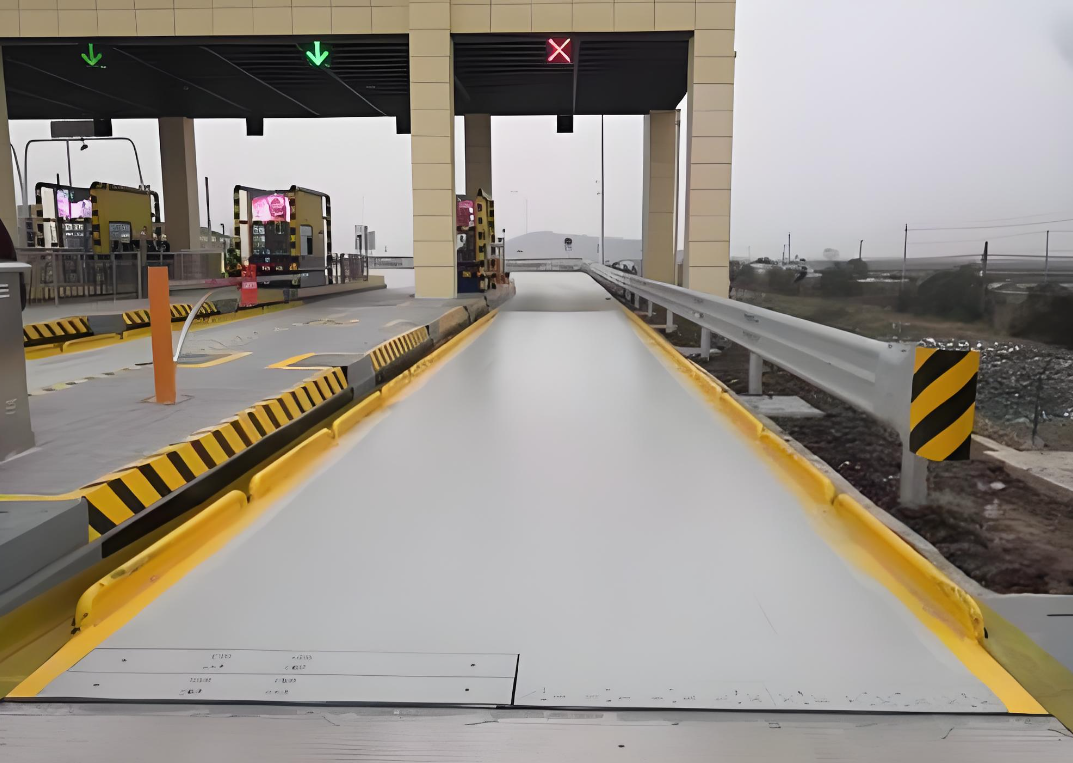
Principle of Measuring and Weighing the Whole Vehicle Weighing Scale on Highways
Keyword: Vehicle type weighing platform , static truck scales ,dynamic truck scales
The whole Vehicle type weighing platform weighing equipment for highways is the development direction of highway weighing and toll collection. This product replaces axle measuring equipment and can effectively prevent various cheating behaviors. This article introduces the principles of static truck scales and dynamic truck scales weighing respectively, and from the perspective of system composition, provides detailed design selection suggestions by analyzing the advantages and disadvantages of various components.
1. Overview
At the beginning of the implementation of weight based toll collection on highways, it played a good role in curbing over limit transportation and significantly increased toll revenue. However, axle measuring equipment is commonly used in weighing devices, and the principle of measuring equipment requires that Vehicle type weighing platforms must pass at a constant speed in order to measure accurately. Some car owners, driven by profit, have engaged in various cheating behaviors. The problem of vehicle cheating and reduced tolls seriously disrupts the normal operation of toll stations, causing the loss of highway tolls and easily leading to traffic accidents. In order to curb the behavior of non-standard weighing and evasion of vehicle tolls, reduce toll disputes, improve traffic efficiency, reduce safety hazards, and reduce the difficulty of toll site management, the axle measuring equipment on highways is generally replaced with whole Vehicle type weighing platform measuring equipment. The whole vehicle weighing platform can prevent various cheating behaviors and is the development direction of highway weight based toll collection.
2: Measurement and weighing principle of Vehicle type weighing platform
2.1: Principle of static truck scales
A weighing scale uses the principle of strain electrical measurement to weigh. A strain gauge is attached to the elastic body of the weighing sensor to form a Wheatstone bridge. At zero load, the bridge is in a balanced state and the output is zero. When the elastic body is subjected to a load, each strain gauge produces strain proportional to the load, and the magnitude of the applied load can be measured by the output voltage.
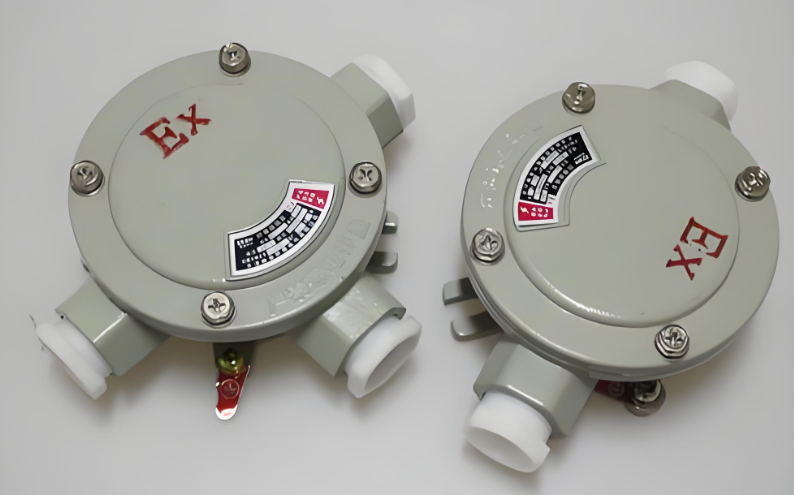
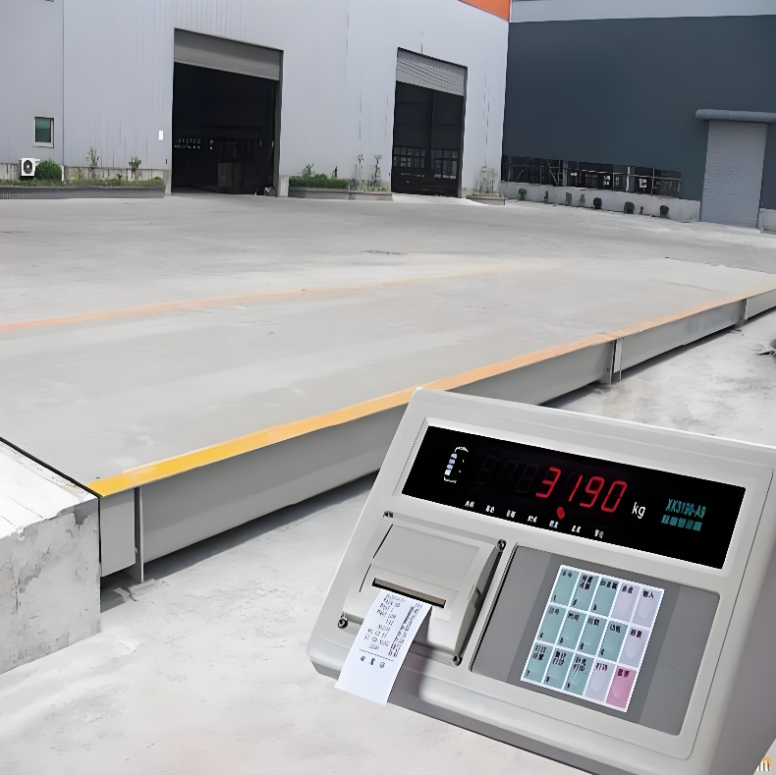
Install multiple weighing sensors below the weighing platform, connect multiple sensor cables in parallel into the junction box, and then connect one cable to the instrument. When the car drives onto the weighing platform, the platform transmits the force to each weighing sensor, causing the resistance of the strain bridge to change, resulting in a change in the output voltage, that is, an electrical signal is output. This electrical signal is transmitted to the instrument, and after digital filtering, linear amplification, A/D conversion, and CPU processing, the final weighing value is displayed.
2.2: Principle of dynamic truck scales Weighing
When the first vehicle reached the weighing platform, the vehicle separator was obstructed and the system sensed that the vehicle was starting to load. The axles are sequentially passed through an embedded axle load gauge, and the system analyzes the number of axles and direction of travel of the vehicle. The weighing sensor senses the pressure of the vehicle and converts it into an electrical signal, which is amplified by the weighing circuit and AD converted into a digital signal. The weighing unit calculates the weight of the vehicle on the weighing platform based on the digital signal. When the vehicle leaves the light curtain, the system senses that the vehicle is fully loaded, automatically determines the Vehicle type weighing platform model, speed, direction of travel, and other data, and calculates the axle weight and total weight of the vehicle based on the weight of the weighing unit. The system uploads the calculated weighing information to the charging computer, and the weighing is completed in __ times.
Before the first vehicle is fully weighed, if a second vehicle is weighed, the system uses the same calculation principle as the first vehicle to calculate the number of axles, vehicle type, speed, and other data of the vehicle. After the second Vehicle type weighing platform is fully weighed, the system will confirm whether the first Vehicle type weighing platform end. If the first vehicle has already started to be weighed, the system will calculate how many axles of the first vehicle are being weighed, thereby obtaining the remaining weight of the first vehicle on the weighing body. The total weight of the weighing platform minus the remaining weight of the first vehicle is the weight of the second vehicle, and the weighing data of the second vehicle is also calculated. The system uploads the data of the second vehicle.
Before the first vehicle is fully weighed, if there is a third Vehicle type weighing platform on the scale, the system uses the same calculation principle as the first vehicle to calculate the number of axles, Vehicle type weighing platform type, speed, and other data of the vehicle. After the third Vehicle type weighing platform is fully weighed, the system will confirm whether the first vehicle has started to be weighed based on the data of the embedded axle recognizer on the weighing end. If it has already started to be weighed, it will calculate how many axles the first vehicle has to be weighed, thereby obtaining the remaining weight of the first and second vehicles on the scale body; The total weight of the weighing platform minus the remaining weight of the first and second vehicles is the weight of the third vehicle, and the weighing data of the third vehicle is also calculated. The system uploads the data of the third vehicle.
If there is a fourth on car scale before the first on car scale, the principle is the same.
3. Composition of the whole Vehicle type weighing platform metering and charging system
The whole Vehicle type weighing platform metering and charging system consists of the whole vehicle weighing platform (weighing scale, lower weighing end axle recognizer, upper weighing end axle recognizer, weighing control system, vehicle separator, anti-skid, tire barrier anti scratch edge, etc.).
Based on the length of the toll island and the width of the lane at the toll station, the scale platform size is designed in various specifications, such as 3mx 21m, 3.4mx 21m, etc.
3.1: Whole Vehicle type weighing platform
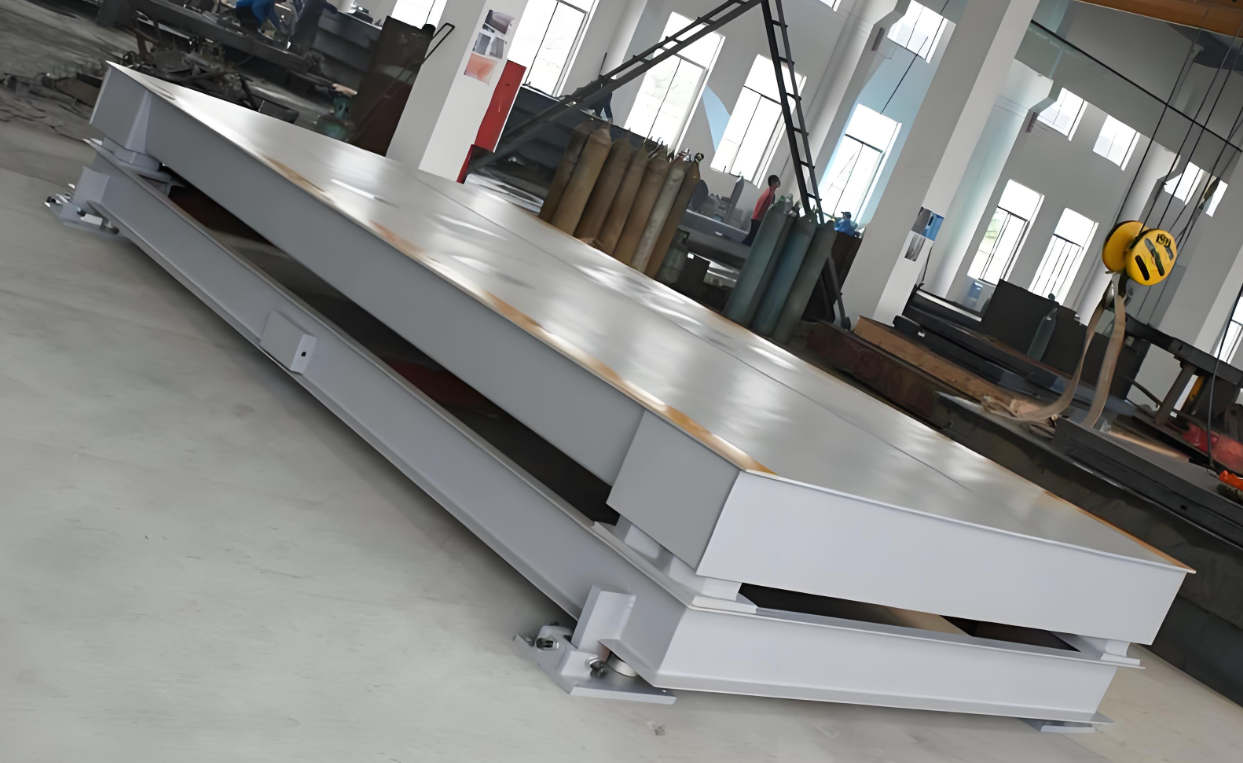
The whole Vehicle type weighing platform, also known as the weighing scale body with weighing sensors. At present, there are two forms of car scales in the market: steel structure and U-beam structure. The common situation is that normal lanes use U-beam structure, while ultra wide lanes use steel structure. The panel of a car scale is usually made by welding two steel plates together or using a whole plate. The welding method of two steel plates has low cost, but the rigidity of the weighing platform is low, and long-term use is prone to deformation of the weighing body. The whole plate welding weighing platform has strong rigidity, but the cost is relatively high. The weighing platform is usually welded with CO2 gas shielded welding, and after welding, it needs to be pre treated with shot blasting and sandblasting to ensure the adhesion strength of the paint film. Adding patterned steel plates on the surface effectively improves the wear resistance and slip resistance of the equipment.
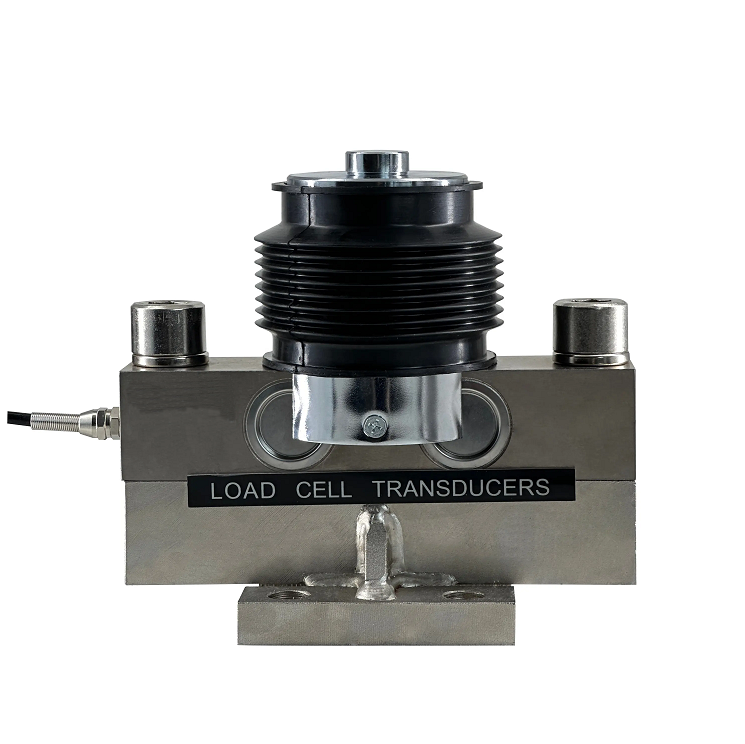
There are two main types of weighing sensors for weighing scales: bridge type and column type. The advantage of bridge sensors is strong resistance to lateral forces, mainly used for static weighing scales. The advantages of column sensors are fast dynamic truck scales response, small size, and easy maintenance, mainly used for dynamic truck scales weighing scales. Therefore, column sensors are commonly used in the measurement products of highway vehicle weighing platforms, which have superior performance and higher reliability.
3.2: Vehicle separator
The function of the vehicle separator is to separate the vehicles and provide the final signal to the weight control system, so that the system can perform data calculations on the vehicles. There are two types of vehicle separators used for toll collection on highways, one is infrared grating, also known as light curtain; One is a ground sensing vehicle detector. The characteristic of a light curtain is fast and accurate detection, which can separate vehicles with a distance of more than 0.1 meters. The disadvantage is that it is installed on a safety island and may be damaged by vehicles. The characteristic of ground sensing vehicle detectors is that they are buried inside the road and are not easily damaged, but the detection accuracy is not high. If the distance between two vehicles is less than 1.5m, it is easy to misjudge. These two devices have distinct characteristics, so they are generally used in conjunction in the weight based toll control system of highways. That is, when the light curtain is working normally, the system uses the light curtain signal as the vehicle separation signal. When the light curtain malfunctions, the system automatically switches to the ground sensing vehicle detector signal and issues a light curtain fault alarm.
3.3: Lower scale end shaft recognizer
The lower axle recognizer is located at the end of the toll booth and generally consists of two pressure sensors. It is installed as a whole and can automatically record the number of axles, axle weight, and the pressure ratio of the axle weight of the overloaded vehicle. Compared with traditional tire identifiers, it can significantly improve the recognition rate of the number of axles and provide accurate data for the weighing control system. The length of the wheel axle recognizer is adapted to the weighing platform, with a detection width of 2 1100mm for ordinary lanes and 2 1500mm for ultra wide lanes. When the axis recognizer malfunctions, a fault alarm can be issued through hardware and software.
3.4: Compared with the lower scale end shaft recognizer, the upper scale end shaft recognizer has a heavier task in the measurement control system. In addition to automatically recording the number of axles, axle weight, and the pressure ratio of the axle weight of the vehicle, it also bears the responsibility of determining the Vehicle type weighing platform model, driving direction, and driving speed. Because a very important data for highway weight based toll collection is vehicle information, which directly affects the toll amount, the design of the weighing end is more complex. It generally consists of 6 pressure sensors, with a width consistent with the width of the weighing platform and divided into two output signals, providing accurate data on the upper weighing axis for the weighing control system. According to different toll stations, threshold values can be adjusted separately for higher adaptability. When the wheel axle recognizer malfunctions, a fault alarm can be issued through hardware and software.
The measurement control system is the control core of the weighing and toll collection system of the highway whole vehicle weighing platform. The system can automatically receive various types of information from components such as weighing sensors, upper scale end recognizers, lower scale end axle recognizers, and vehicle separators, integrate and calculate various data signals, and obtain data such as vehicle weight, speed, model, number of axles, axle weight, and axle spacing. It seamlessly integrates with the high-speed highway weighing and toll collection software system.
Due to the large number of toll lanes and high traffic volume on highways, it is required that the weight control performance be stable, the parameters be easily set, the operation be simple, and the adaptability to the working environment be strong. In early axle measuring products, the control system was relatively simple and the display information was limited, which could no longer meet the current usage needs. The weighing control system of the vehicle type weighing platform requires an LCD display screen with a fully Chinese operating interface. The weighing information includes total weight, number of axles, axle weight, axle spacing, speed, etc., which is convenient for equipment maintenance; The system interface also requires standard PS/2 keyboard interface, Ethernet interface, RS-232C serial port, vehicle separator interface, wheel axle recognition sensor interface, traffic light control interface, railing machine control interface, etc., to facilitate later functional upgrades.
3.5: Anti slip
Anti slip is a key issue in the measurement of whole vehicle weighing platforms on highways, especially on rainy days. If the anti slip problem is not handled properly, it can easily cause the vehicle to slip, lose control or rear end, resulting in many unnecessary troubles. At present, there are several anti-skid measures for vehicle products on the market, including coating anti-skid, welded steel bar anti-skid, full laid patterned board anti-skid, intermittent laid patterned board anti-skid, etc. Their advantages and disadvantages are as follows:
1. Coating anti slip: If commonly used modified epoxy resin with diamond sand curing or special anti slip coating roughening technology is used for road surfaces and ship decks, the initial anti slip effect is relatively good, but the sharp edges and corners after roughening cause significant damage to the tire, and its processability is poor. Therefore, the steel plate surface needs to be cleaned by sandblasting before coating, and the remaining uncovered parts can only be manually painted instead of automatically sprayed and dried, which greatly reduces the anti-corrosion, anti rust performance and aesthetics of the remaining exposed parts. The adhesion with the metal table is poor, and it is easy to fall off. After falling off, the on-site recovery is greatly affected by environmental temperature and humidity, and it is not easy to recover. Moreover, the maintenance cost is high and the construction period is long. It takes about 15 days to use at room temperature.
2. Anti slip of steel bars: that is, welding steel bars along the direction of travel on the surface of the weighing platform. The characteristics are: low weld strength, easy detachment of steel bars from welding, strong feeling of vehicle over balance, and poor driving experience.
3. Full laying of patterned steel plates for anti slip: If the weighing platform is fully covered with patterned steel plates, it cannot be replaced on site after local pattern wear.
4. Intermittent laying of patterned plates for anti slip: Lay high-quality bean shaped patterned steel plates on the surface of the scale body. After leveling all the patterned steel plates, place them on the scale body panel, compact them with heavy objects, and then use carbon dioxide gas shielded welding for continuous welding. The patterned board is laid on four roads, which can cover the driving area of general road vehicles and ensure that all types of vehicles can achieve ideal anti slip effect. The patterned plate adopts a discontinuous distribution structure, which improves the final anti-skid effect by changing the friction coefficient between the vehicle tires and the anti-skid plate; The intermittent layout structure facilitates local replacement on site, reduces replacement time, greatly improves maintenance efficiency, and facilitates the discharge of surface water accumulation.
3.6: Tire Barrier Boat Edge Rubbing
In the measurement products of the whole Vehicle type weighing platform, in order to prevent cheating such as wheel crushing of the foundation road surface and lateral friction of the tire on the edge stones, vehicle tire barriers, commonly known as anti rubbing edges, are generally installed. There are three common types of anti scratch edge structures in the market, namely: anti C type, inverted V type, and inverted U type. Among them, the anti-C type appeared earliest, characterized by a simple structure and low cost, but the disadvantage is poor strength and easy deformation under heavy vehicle compression. Currently, it has been basically eliminated. The inverted V-shaped feature is characterized by simple processing and low cost. Two steel plates can be placed in an inverted V-shaped shape and welded together. The disadvantage is that the welding joint is sharp, which can easily cut the tire and cause controversy. The inverted U-shaped plate is made of hot-rolled sheet metal, which is integrated and bent to form an inverted U-shaped section, and then connected to the weighing platform using continuous welding technology around the periphery. The integrated bending process improves the overall stiffness of the vehicle tire barrier through the principle of cold work hardening. Compared with the vehicle tire barrier formed by steel plate lap welding, it has the characteristics of less welding residual stress, high strength, good reliability, and beautiful appearance. The vehicle tire barrier has an inverted U-shaped cross-section with a wide bottom and circular top, effectively avoiding possible tire scratches and ensuring driving safety. At the same time, the vehicle tire barrier is intermittently arranged on the weighing platform to facilitate the drainage of surface water accumulation.
4. Conclusion
The working principle and structural characteristics of the whole vehicle weighing platform measurement product determine the accuracy and non cheating of the vehicle weighing. Practice has also proven that it meets the new needs of the development of weight based toll collection on highways, solves many practical problems that axle measuring equipment cannot solve, and will be the mainstream equipment for weight based toll collection for a long time to come.
What is the function of the Weighing Sensor Junction Box
Analysis of the Working Principle of Tank Scale Weighing System
Related Article