Research on the sources of non-stop detection errors and technical solutions for the layout of weighing units
Research on the sources of non-stop detection errors and technical solutions for the layout of weighing units
Keyword: non-stop detection, dynamic weighing system, highway transportation vehicle
【Abstract】: Through the exploration and analysis of the sources of non-stop detection errors, the problems that have been studied and need to be further studied and solved are proposed. Some research results on dynamic weighing algorithms are analyzed and compared, and future development directions are pointed out. Based on the application background of China's highway transportation vehicle technology for overloading control, this study objectively understands the use of various dynamic weighing systems in practical engineering applications and the existing problems that need to be solved. By studying the effects of wide and narrow weighing units commonly used in non-stop detection on vehicle speed, acceleration, tire driving force, tire pressure, tire shape, tire width, motion trajectory, as well as problems such as crossing, changing lanes, parallel, and variable speed in the measurement area, the influence of tire pressure on narrow width weighing units such as quartz crystal or narrow strip type was tested, and the adaptability of different width weighing units to high and low vehicle speed accuracy differences was verified. On the premise of understanding the influence of tire pressure and speed, the study adopted narrow and wide weighing units. The solution of combined deployment, through actual installation and verification, It has been preliminarily confirmed that this complementary product combination deployment scheme has certain advantages in achieving true 5-level accuracy, and is worthy of further exploration and research by the industry.
Introduction:
Vehicle overload detection is an important component of the field of overloading control. Overloading is the primary factor affecting the safety of vehicle operation. Overloaded vehicles operate under overload for a long time, and their braking, operation, and other safety performance are significantly reduced. They are prone to dangerous situations such as tire blowouts, brake failures, steel plate spring fractures, and axle fractures. According to relevant foreign institutions' calculations, if vehicles traveling on the road are overloaded by about 50%, the normal service life of the road will be shortened by about 80%. Therefore, accurately measuring the actual load capacity of transportation vehicles is particularly important for effective supervision and law enforcement by management departments in accordance with the law. In addition, big data analysis of vehicle load capacity is of great significance for the design of highways and bridges. According to domestic experts' analysis, the increase in vehicle overweight and its damage to the road surface is geometrically increasing. A truck that exceeds the limit by 10% will cause a 40% increase in road damage. The damage caused by a 36t overweight vehicle to the road is equivalent to the damage caused by 9600 1.8t small cars; If the axle load of a vehicle exceeds 30% of the limit, the service life of the road will be shortened by 56%, resulting in a sharp increase in road maintenance costs and a shortened service life of the road surface. Against the backdrop of China's highway transportation vehicle technology for overloading control, in order to ensure the normal operation of highways and promote the healthy development of the highway transportation industry, the country has increased its efforts, investment, and legal regulations for overloading control. For example, in the "Opinions of the General Office of the State Council on Implementing Highway Safety and Life Protection Projects" (State Council Office [2014] No. 55), it is proposed to "actively promote the application of new technologies and information technology means, and continuously invest in management equipment such as traffic technology monitoring". The Ministry of Transport clearly stated in the "Several Opinions on Strengthening the Standardization Construction of Highway Administration Law Enforcement" (Jiaogaolu Fa [2014] No. 106) that "we will strive for the support of local governments and relevant departments, accelerate the trial and promotion of non site law enforcement in highway administration, gradually reduce the number of road enforcement personnel, and improve the efficiency of law enforcement work". The revised draft of the "Management Measures for the Governance of Illegal Over limit Transportation on Highways" (Ministry Order No. 2) requires that "highway management agencies should, according to the needs of protecting highways, set up technical monitoring equipment such as vehicle weighing and detection at important sections and nodes of the highway network such as the main channels for cargo transportation, important bridge entrances, and highway entrances, and investigate and punish illegal over limit transportation behaviors in accordance with the law.
1: The sources of error in non-stop detection and the problems that need to be further studied and solved
Non stop detection belongs entirely to dynamic weighing. Vehicles pass through the axle load measurement section at a certain speed, and axle load detection is carried out by various weighing units such as flat plate, curved plate, quartz crystal, narrow strip, and narrow plate arranged in the section. Due to the short working time of the tire weighing unit table, and the interference caused by objective or subjective factors on the table, in addition to the real axle load, such as vehicle speed, acceleration, tire driving force, tire pressure, tire shape, tire width, motion trajectory influence, as well as complex situations such as crossing, changing lanes, parallel driving, and variable speed in the measurement area, are the main sources of error in non stop detection. These factors pose great difficulties for achieving high-precision measurement in dynamic weighing, and it is common for practical applications to exceed the 5-level detection error regulations. Therefore, how to accurately measure the true weight under the influence of random and uncertain interference factors has always been the technical difficulty and key of dynamic weighing systems.
1.1: By studying effective dynamic weighing algorithms, the impact of some interference signals can be reduced. Due to the fact that car vibration interference is a low-frequency signal, axle load signals are also low-frequency signals. Therefore, simple filtering methods cannot effectively remove various low-frequency interferences. In terms of dynamic algorithm research, the research content mainly includes two parts: denoising preprocessing and wheel axle weight calculation. In engineering applications, denoising preprocessing mainly adopts the average filtering method and FIR digital filtering method. The average filtering method has a significant filtering effect on random white noise, but it can reduce the effective signal amplitude and cause measurement result errors. The FIR digital filtering method utilizes the characteristics of effective signals and interference noise in different frequency bands to design (high pass, low-pass, band-pass) digital filters, which have significant filtering effects on periodic interference, but the suppression effect on random signals is not ideal. In terms of axle weight calculation, according to the different width of the force surface of the weighing unit, it can be divided into two types: wide weighing units (such as flat plate type 900mm wide) and narrow weighing units (such as quartz crystal type 50mm wide, narrow strip type 70mm wide). Among them, wide weighing units have a force area greater than the width of the wheel track, and the peak value of their waveform can characterize the current wheel weight. The narrow weighing unit is a wheel track with a force area smaller than the width of the wheel. In this case, the waveform needs to be integrated, and the integrated value is used to characterize the current wheel weight of the wheel. Due to the fact that dynamic weighing is a multi factor coupled and complex dynamic measurement process, there are many factors that affect the accuracy of vehicle dynamic weighing results. Therefore, domestic and foreign research institutions and scholars have conducted various exploratory studies on the accuracy of dynamic weighing. The DV method, system identification method, and neural network method have been gradually applied in dynamic weighing technology, achieving certain results. The DV method first measures the acceleration, velocity, and displacement data of the vehicle, solves the differential equation system through numerical methods, and then obtains the axle load information of the car. The disadvantage of this method is that it measures multiple variables and is susceptible to noise interference. The system identification method is to establish an input-output response model for the weighing system, and use this model to reverse calculate the vehicle axle weight.
This method has high measurement accuracy and is suitable for high-speed measurement, but it requires high model applicability and accuracy in solving key parameters. Neural network method is a data-driven approach to building weighing models. It takes factors that affect axle weight measurement results as inputs to the neural network and car axle weight as outputs. Through experiments, a large amount of data is collected as the training set for the neural network. By setting appropriate loss functions, the mapping relationship between the input and output of the neural network is trained. Its advantages lie in its excellent nonlinear mapping ability (significant advantage for complex models), parallel computing (improving computational speed), high accuracy, and adaptability. The disadvantage is that it requires a large number of experimental samples for training, and the cost of data acquisition is high. In terms of future development direction, with the gradual introduction of technologies such as IoT big data and artificial intelligence, there is a need to continue researching dynamic algorithm models. We hope to rely on these new technological means and methods to continuously optimize dynamic weighing algorithm problems.
1.2: In practical engineering applications, there are still some issues that need to be addressed based on the usage of various dynamic weighing systems
(1) In the development of dynamic weighing systems, the weighing unit, as the core component of overload detection products, is the basis for ensuring the performance of overload detection equipment. The existing wide and narrow weighing units are usually connected in parallel with strain gauges or sensing units inside, which cannot distinguish the weighing position and cannot intelligently identify the tire width. Therefore, it is difficult to solve the problem of identifying the vehicle position and tire pressure area when two vehicles cross the track in parallel, and the measurement accuracy is also limited when crossing the track, and the stability needs to be further improved.
(2) In terms of measurement accuracy, dynamic weighing signal processing is a key technology in weighing systems. In engineering, it still remains at the level of simple weight extraction algorithms based on mean values (wide weighing units) or integral values (narrow weighing units). In actual detection processes, it is difficult to adapt to environmental factors (temperature, humidity, tire pressure, road surface smoothness, etc.) and interference from non-standard driving, which poses a high risk of false detection and missed detection, and can easily lead to law enforcement disputes.
(3) In terms of intelligent recognition, the underlying reason for overweight is driven by interests. For a considerable period of time, the phenomenon of overweight is difficult to eradicate. It is necessary to study algorithms for measuring vehicle tire prints (including tire width, single and twin tires, and tire type), speed (including changes in vehicle speed and acceleration), and wheelbase based on a new type of weighing unit, and to identify abnormal driving states such as lane crossing, lane changing, parallel, and acceleration/deceleration. Intelligent recognition of some vehicles is trying every means to find loopholes in the dynamic weighing system, avoiding the problem of the system's inability to recognize and overweight penalties through emergency stops, ultra slow driving, and other means.
2: Research on the Relationship between Tire Pressure and Dynamic Weighing Calibration and Application, as well as the Technical Scheme for Weighing Unit Layout
According to relevant standards for freight vehicles, the normal tire tread length of the vehicle is within 225mm. Therefore, for wide weighing units such as flat plates (such as 900mm width), the actual weighing method is the whole wheel. In the case of inconsistent tire tread caused by tire pressure, it is unlikely to cause significant errors in calibration and actual use. However, for narrow weighing units such as quartz crystal type (e.g. 50mm width) and narrow strip type (e.g. 70mm width), they belong to the local tire weighing method, and theoretically, their tire pressure will cause certain errors. We represent the pressure of the tire on the road surface as P, the weight of the wheel as F, and the area of the tire in contact with the road surface as S, which can be expressed using the pressure formula: P=F/S. For narrow weighing units, while keeping the weight of the wheel F constant, we change the air pressure by filling the tire with air. We measure the length of the tire print in contact with the ground using a special method, and obtain a set of data through a narrow strip (70mm width) weighing unit based on experiments. The relationship between the tire ground contact length (i.e. tire print) and weight coefficient for single and double tire axles is shown in Figure 1 and Figure 2, respectively.
Figure 1 Single tire axle
Figure 2 Twin Wheel Axle
From the graph, it can be seen that different tire pressures can cause changes in the length of contact between the tire and the ground. The weight coefficient in the graph is actually a proportional coefficient formed by the changes in P and S. Through data analysis and visualization, it can be concluded that when the tire pressure changes due to inflation and deflation, there is a linear relationship between the contact length of the same wheel and the weight coefficient when passing through the narrow strip weighing unit in the measurement area. However, the starting range of the linear coefficient corresponding to different tire pressures is different, and the weight coefficient fitted by the data is also different. Further analysis shows that when the tire pressure changes, the width of the tire contact with the ground does not change significantly, while the length of the tire contact (i.e. the length of the tire contact in the driving direction) changes significantly. This means that the tire pressure area applied to the weighing unit, which is the product of the width of the narrow strip weighing unit of 70mm and the width of the tire contact, does not change significantly. Therefore, when deflation causes insufficient tire pressure, the pressure area directly causes a significant change in the total area of the tire contact with the road surface. According to the identification curve of the vehicles in the figure and the analysis of the measured data, it can be concluded that among the 9 sets of data used for single axis fitting, 90% of the new 12 vehicles have high tire pressure, resulting in a larger fitting coefficient and a smaller weight value. When inputting all the data, 80% of the new 15th weight vehicles (not deflated) have higher tire pressure than the same 15th weight vehicle (deflated), resulting in a smaller weight value. The 125 car is very old, with low tire pressure and a large actual weight coefficient. However, the fitted weight coefficient is too small, and the calculated weight value is too large. Through the above experiments and analysis, we have concluded that tire pressure can cause errors in the dynamic weighing system constructed by narrow weighing units. Because tire pressure is unknown in actual vehicles, and the pressure of each tire is not always standardized, it is almost impossible to establish and compensate for weighing error models based on the size of the pressure. Therefore, in practice, the weighing error introduced by narrow weighing units due to tire pressure is ignored. In addition, in practice, although the wide weighing unit is not affected by tire pressure, its dynamic accuracy deteriorates at speeds greater than 80km/h or even 60km/h compared to speeds lower than this. The wide platform means that the high-speed dynamic response and accuracy also have an unsatisfactory side with the increase of vehicle speed. There is still much exploration and research significance for the entire system to truly achieve level 5 accuracy and fully meet the standard of level 5 accuracy in use. At present, narrow weighing units are buried in at least 2 rows, and quartz crystal type units are buried in more than 4 rows. However, increasing the number of rows can improve the accuracy of reducing axle jumping and other situations, but it still has no effect on tire pressure. Therefore, we want to find a technical solution that can maintain accuracy advantages at low speeds below 60km/h and at vehicle speeds above 60km/h, achieve complementary advantages in product technical characteristics, and achieve more accurate weighing over a wide speed range, thereby improving the accuracy advantages of the entire non-stop detection system. We adopt a solution of combining narrow weighing units (such as 70mm wide narrow strip type) and wide weighing units (such as 300mm wide narrow plate type) to construct a dynamic weighing system, as shown in Figure 3.
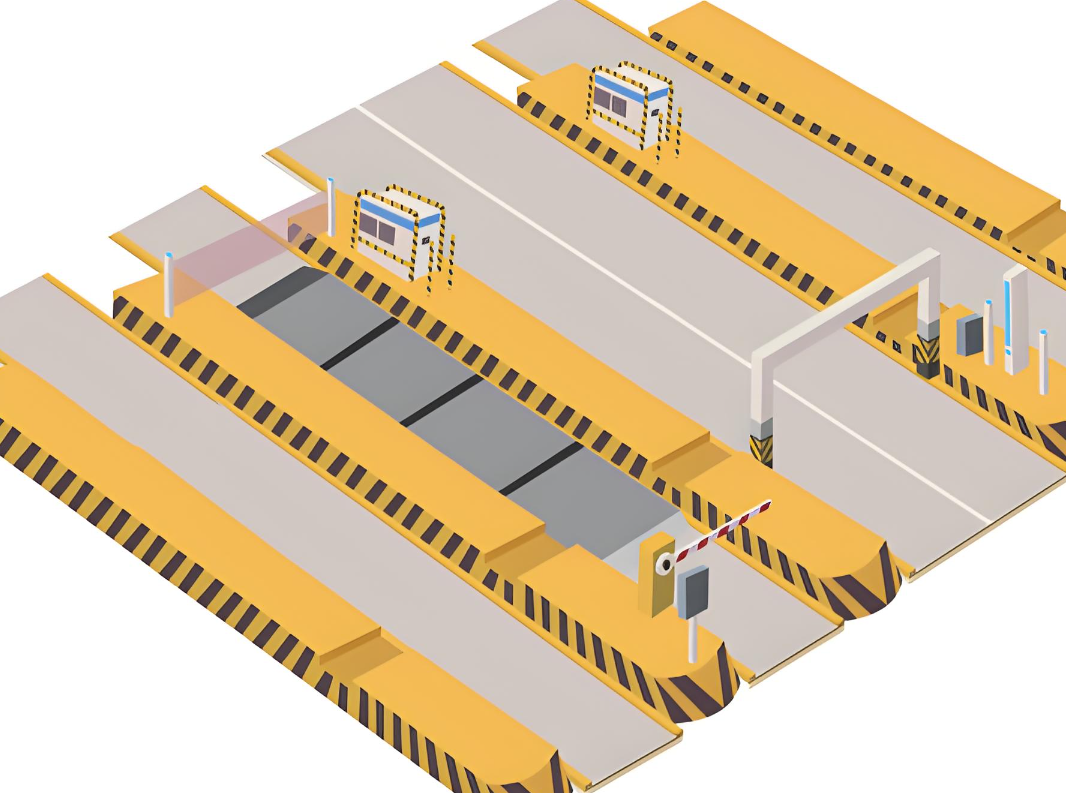
Figure 3 Combination layout scheme of 2-row narrow strip and 1-row narrow plate
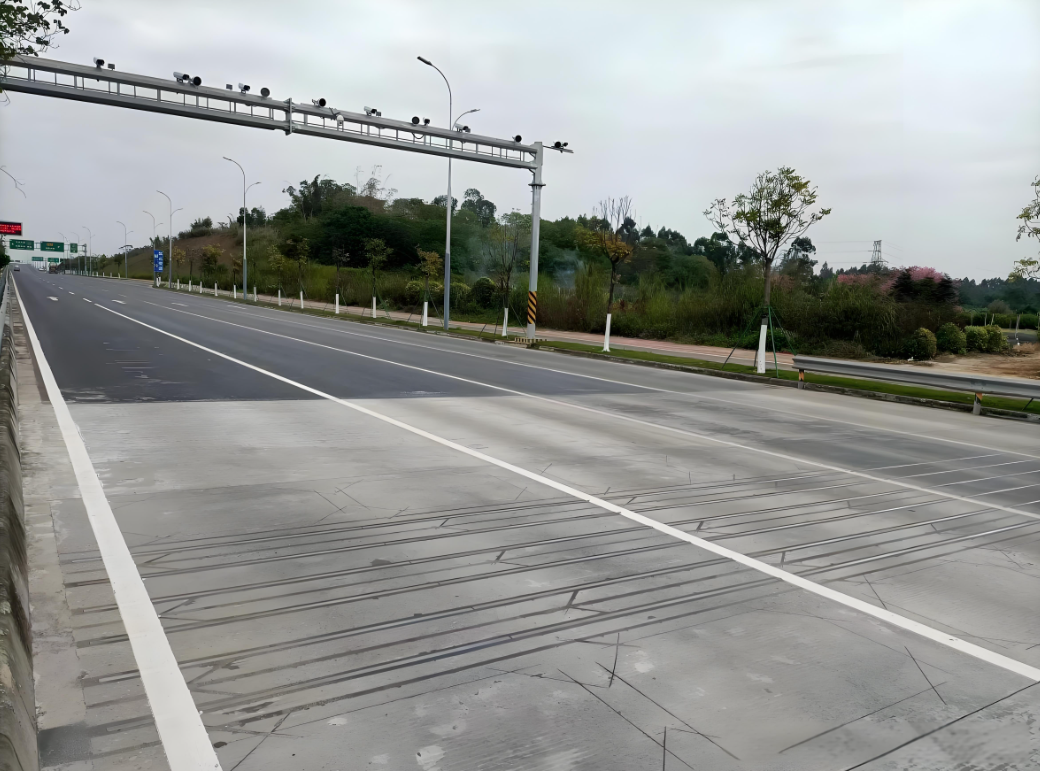
The installation situation of the test site completed according to the layout plan in Figure 3 is shown in Figure 4.
Figure 4 Installation site of narrow strip and narrow plate weighing units
Taking the 4-axis vehicle, which is difficult to accurately weigh, as an example, the preliminary measured data obtained from the test site are shown in Figure 5. We found that this layout has obvious advantages and can achieve effective measurement speed coverage for both high and low speeds. The 300mm wide narrow plate weighing unit not only complements the influence of tire pressure changes, but also complements the shortcomings of the 70mm wide narrow strip weighing unit in terms of accuracy below 10km/h. This complementary product combination layout scheme does not require the traditional method of increasing the number of rows to repeatedly improve accuracy and increase costs, and is worthy of further exploration and research by the industry. Looking ahead to the future, from the perspective of improving the accuracy of non-stop detection, we still have many topics worth exploring. We hope that industry engineering and technical personnel can continue to explore and make technological contributions to product application innovation in this field.
Measurement Uncertainty Analysis of Remote Verification of Dynamic Truck Scale Measurement Characteristics
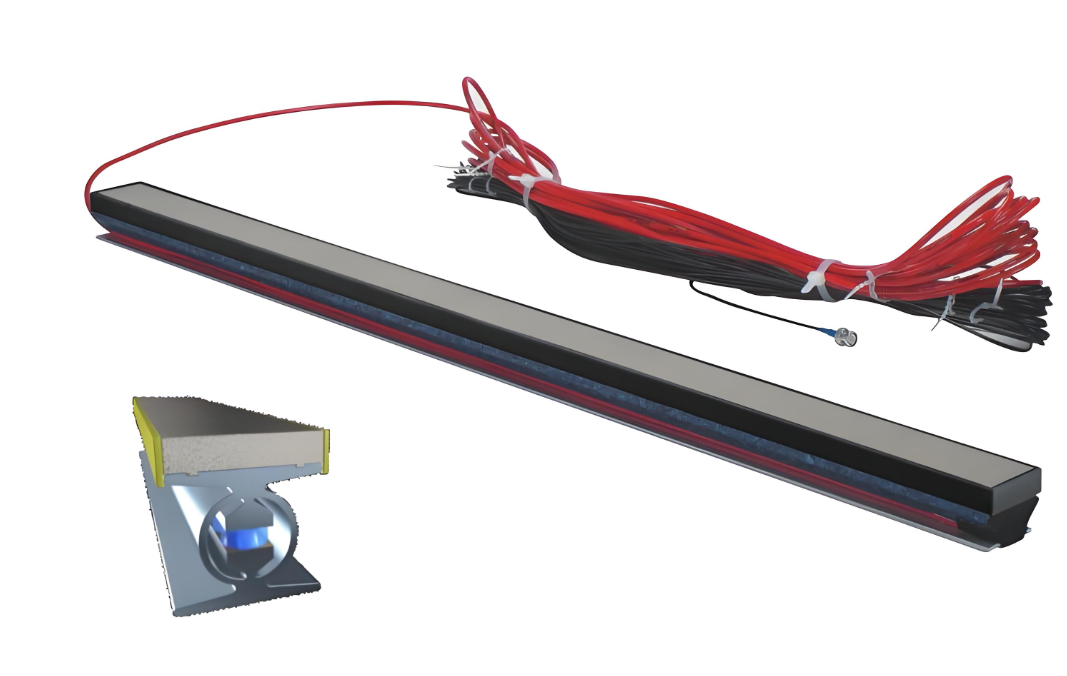
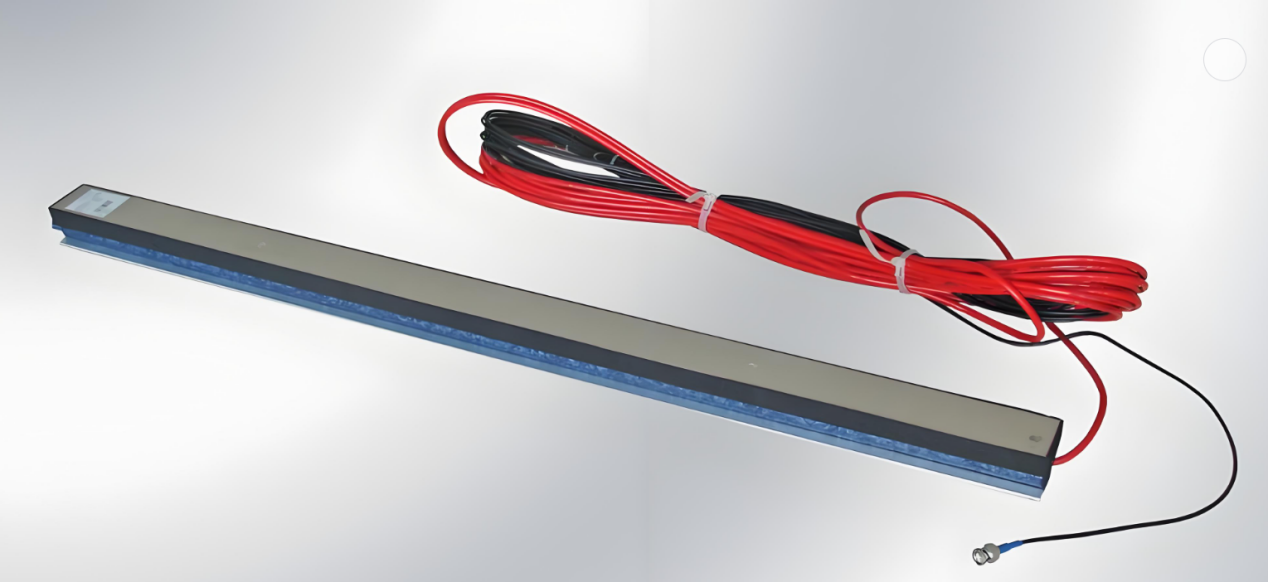
Dynamic quartz weighing sensor
Related Article