Measurement Uncertainty Analysis of Remote Verification of Dynamic Truck Scale Measurement Characteristics
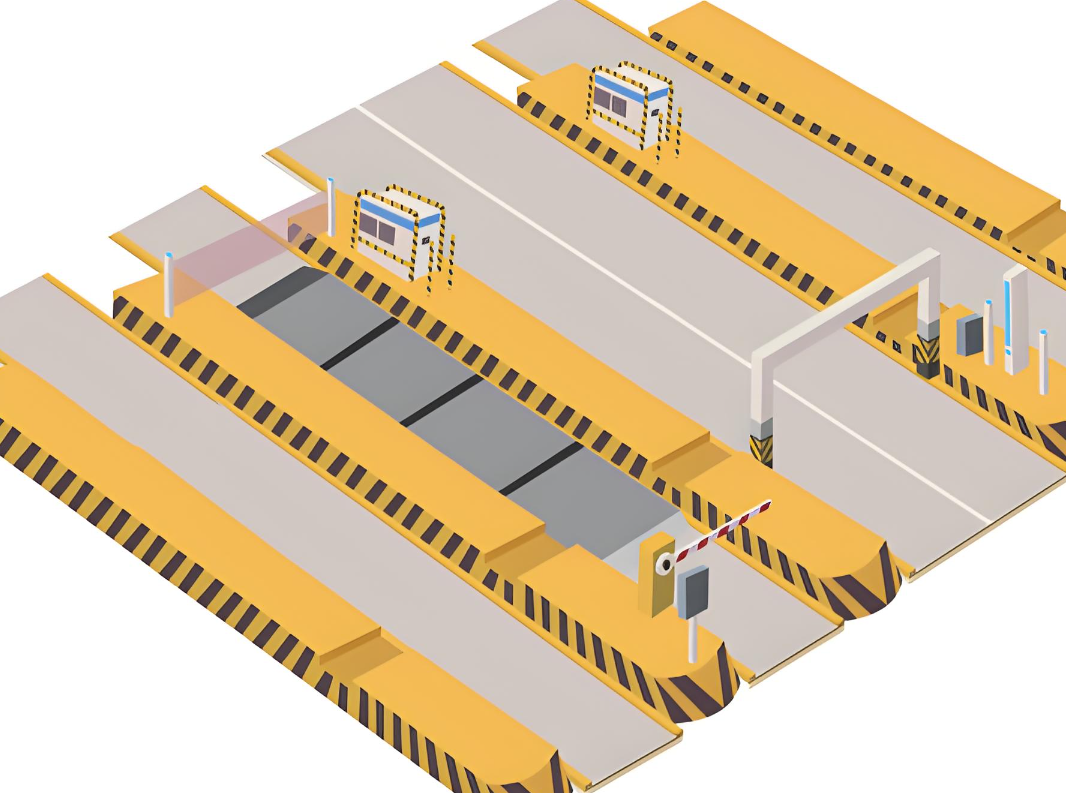
Measurement Uncertainty Analysis of Remote Verification of Dynamic Truck Scale Measurement Characteristics
Keyword: Dynamic Truck Scale, dynamic weighing , dynamic scales
【Abstract】: The current frequency of periodic calibration for highway vehicle automatic scales (hereinafter referred to as dynamic truck scales) is gradually unable to meet the needs of current off-site law enforcement work. Information technology is needed to implement differentiated and precise testing to ensure the reliability of weighing data. This article establishes a measurement uncertainty evaluation model based on the remote verification method of metrological performance, analyzes the sources of various uncertainties, and focuses on the impact of abnormal driving, speed, fuel consumption, etc. on the measurement uncertainty of dynamic weighing. From a technical perspective, it provides an analytical basis for the reliability of dynamic weighing data and technical support for the accurate use of highway dynamic weighing equipment.
Introduction:
Overloading transportation on highways can damage road and bridge structures, easily causing traffic accidents and threatening the safety of people's lives and property. Since 2013, various regions across the country have successively carried out non site law enforcement work for highway overloading control, severely cracking down on serious illegal over limit transportation behaviors, and ensuring the safety of road traffic transportation. The dynamic truck scale is a key weighing equipment in the non site law enforcement system for highway overloading control, and its accurate and reliable measurement values are the prerequisite for implementing technological overloading control. However, due to the fact that dynamic truck scales measure moving cargo vehicles, their measurement accuracy is closely related to driver driving habits, vehicle operating speed, structural type, and other factors. According to incomplete statistics, the average verification pass rate of dynamic truck scales installed on a certain sample area road section remains at around 65% after one operating cycle (usually 6 months). A considerable number of dynamic truck scales, after running for a period of time, can no longer maintain their measurement accuracy at the level of calibration. In fact, such dynamic scales are already considered inaccurate, and there is a great deal of uncertainty in the results of the total vehicle weight given, which poses a risk to highway over limit law enforcement. To solve the problem of inaccurate measurement of dynamic truck scales during the calibration period, while considering the cost of testing, the project research proposes a remote verification method for dynamic truck scales based on Internet of Things technology, which implements differentiated and accurate testing of dynamic truck scales at non site law enforcement points during the calibration period, in order to improve the credibility of dynamic weighing data of dynamic scales.
1: Remote verification mechanism
Remote verification is the application of Internet of Things technology to assess the compliance of the dynamic scales performance of non site law enforcement point dynamic scales through remote verification methods. Compared with daily periodic verification, its remote verification method has significant differences from traditional verification methods. Remote verification is achieved by passing the verified dynamic scales through an agreed reference vehicle at a regular operating speed. The dynamic scales transmits the relevant weighing results, operating speed, and image data to the verification system through the Internet of Things. After calculation by the verification system, it determines whether the dynamic measurement error of the verified dynamic scales remains within the corresponding control limit. The control limit is set according to the error requirements checked during the use of the dynamic scales (usually considering twice the error during verification), When the dynamic measurement error of the verified dynamic truck scale approaches or exceeds the corresponding control limit, the verification system will provide corresponding warning information to remind the dynamic truck scale user unit to analyze and process it in a timely manner, improving the reliability of the weighing performance and operation of the dynamic truck scale.
2: Mathematical Model for Remote Verification
The remote verification of dynamic scales is actually the process of comparing the measurement results uploaded through the Internet of Things with the reference total weight of the verification standard vehicle. In order to improve the credibility of remote verification, the uncertainty of dynamic weighing data measurement results during the verification process should also be considered. This article focuses on the actual working conditions of dynamic truck scales at non site law enforcement points, such as speed and abnormal driving, and proposes an uncertainty evaluation method.
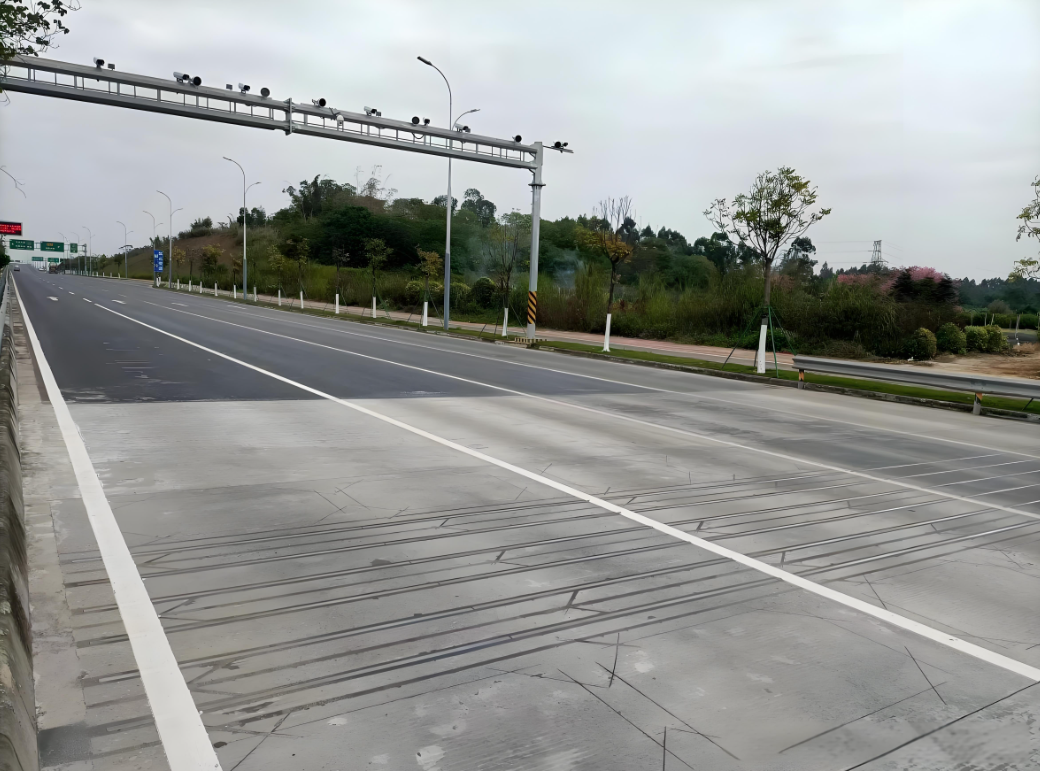
The dynamic truck scale of the non site law enforcement system for overloading control is generally installed on ordinary road surfaces, with a weighing speed range of (0.5-100) km/h. The weighing structure mainly includes axle load, quartz, flat plate, narrow strip, curved plate and other forms. The accuracy level of the total weight of the vehicle is mainly level 5 and level 10 [4]. Remote verification follows the verification plan, using a reference vehicle to conduct one or more tests on the dynamic truck scale. The test results are uploaded to the verification system, and then the verification results are calculated according to formula 1 to evaluate whether the dynamic truck scale is in a normal state based on the set control limits. Verification vehicles (reference vehicles) can use social public measurement standards, such as inspection vehicles from various legal measurement institutions, or use specific social vehicles, such as road rescue vehicles that weigh the entire vehicle through controlled weighing instruments. Different from the periodic calibration of dynamic scales, remote verification reference vehicles can select one or several of the following vehicles based on actual road operation conditions: double axle rigid vehicles, three axle/four axle rigid vehicles, articulated vehicles with four or more axles, etc. [as verification reference vehicles]. During verification, the reference vehicle passes through the verified dynamic scales at a regular operating speed, and the remote verification system uploads the collected weighing data, operating speed data, captured image data, etc. to the verification system platform for calculation and processing.
In the formula: - the relative dynamic error measurement value of the verified dynamic truck scale vehicle;
TMF-REF - Verify the total weight of the reference vehicle;
TMF - Verification reference vehicle total weight displayed by dynamic balance;
1): When | |>2MPEV, it indicates that the dynamic performance of the verified dynamic truck scale has exceeded the control limit requirements, and its dynamic measurement error can no longer meet the usage requirements. A warning message should be given, and the use should be suspended until the repair is completed and the calibration is qualified again before use;
2): When MPEV<| | ≤ 2MPEV, it indicates that the dynamic performance of the verified dynamic truck scale has changed. Although it has not exceeded the requirements of the control limit, the trend of dynamic measurement error has exceeded the requirements of the control limit. Provide information and increase the frequency of verification;
3): When | | ≤ MPEV, it indicates that the dynamic performance of the verified dynamic truck scale is normal and should be managed according to normal equipment. The maximum allowable absolute error (MPEV) of the total weight of the vehicle during dynamic weighing is shown in Table 1.
Table 1 Maximum allowable absolute error of total vehicle weight MPEV
|
Accuracy level |
Maximum allowable absolute error of total vehicle weight MPEV |
|
5 |
2.5% |
|
10 |
5.0% |
3: Analysis and Calculation of Uncertainty Sources
Based on the analysis of the characteristics of remote verification system for dynamic vehicle scales and off-site law enforcement dynamic weighing, the sources of measurement uncertainty for remote dynamic weighing errors mainly consist of two parts: the first part is the uncertainty component introduced during the dynamic performance verification process of dynamic vehicle scales, mainly including measurement repeatability, dynamic vehicle scale resolution, changes in vehicle operating speed, abnormal driving, and fuel consumption losses during remote verification of verification vehicles; The second part is to verify the uncertainty components introduced when measuring the total weight of the vehicle through a control scale. This verification method takes the dynamic scales DCS-30B installed at a non site law enforcement point as an example (with a maximum axle load of 30t, a dynamic division value of 50kg, an accuracy level of 5, and a road speed limit of 60km/h at the law enforcement point). Based on the actual situation of more vehicles running on the road section, three axle rigid vehicles (referred to as "three axle") and six axle articulated vehicles (referred to as "six axle") are used as verification vehicles, and the total weight of the vehicles is determined to be 26.5t (three axle) and 42.8t (six axle) by controlling the scale. The dynamic scales is remotely verified by the verification vehicle, and the measurement uncertainty analysis and calculation of the verification results are given.
3.1: The standard uncertainty component u (TMV) introduced by the input variable TMV
The standard uncertainty source u (TMV) of the input quantity TMV mainly comes from the uncertainty components introduced by the repeatability, resolution, verification of vehicle fuel consumption loss, speed operation changes, and abnormal driving of dynamic truck scales.
3.1.1: Verify the uncertainty of repeatability u 1
Verify the repeatability uncertainty and analyze it using Class A assessment. Verify that the vehicle passes through the verification point at a typical speed of 40km/h (approximately constant speed) on this section of the road, with a total of 10 verifications. The data is shown in Table 2. Use the Bessel formula to calculate and verify the uncertainty of repeatability, as shown in formulas (2) - (4).
Table 2: Uncertainty u 1 for verifying repeatability (unit: kg)
|
No. of times |
1 |
2 |
3 |
4 |
5 |
6 |
7 |
8 |
9 |
10 |
TMF-REF |
TMF |
S |
U1 |
|
Three axes |
26650 |
26500 |
26650 |
26600 |
26650 |
26600 |
26650 |
26650 |
26600 |
26650 |
26500 |
26610 |
61.5 |
61.5 |
|
Six axes |
42950 |
42800 |
42900 |
42900 |
42900 |
42850 |
42900 |
42950 |
42950 |
42850 |
42800 |
42895 |
49.7 |
49.7 |
Note: m is the actual number of verifications, and in the case, it was verified once, so m=1.
3.1.2: Verify the uncertainty u 2 caused by the resolution of the weighing instrument readings
Due to the division value d of the dynamic truck scale being 50kg, the uncertainty component caused by the division value of the dynamic truck scale is:
2 u = 0.29d =14.5kg
3.1.3: Uncertainty caused by vehicle fuel consumption u 3
After several tests and verifications, the actual fuel consumption of the reference vehicle and the specific theoretical fuel consumption provided by the manufacturer have been verified. For example, the fuel consumption of a two axle vehicle is 22 kg/100 km, a three axle vehicle is 29 kg/100 km, a four axle vehicle is 35 kg/100 km, and a six axle vehicle is 40 kg/100 km; Actual verification once is calculated based on 100 kilometers of operation. Assuming that the impact of fuel consumption follows a uniform distribution, then:
|
Three Axes |
|
|
Six Axes |
|
3.1.4: Uncertainty caused by changes in vehicle speed u 4
JJG907-2006 "Verification Regulations for Automatic Weighing Instruments of Dynamic Highway Vehicles" does not specify the specific speed range for testing, so the speed limit for dynamic truck scales at non site law enforcement points is taken as the minimum value of road speed limit and dynamic truck scale speed limit. Under the speed limit, different vehicle speeds with an interval of 5km/h were used to perform weighing and statistical analysis on the dynamic scale at the assessment point. The dynamic weighing error of the dynamic vehicle scale at this verification point did not change by more than 0.47% within the operating range of the maximum and minimum speeds. Assuming a half width of 0.47%/2 and following a uniform distribution:
|
Three Axes |
|
|
Six Axes |
|
3.1.5: Uncertainty analysis introduced by abnormal driving u 5
Under normal circumstances, a truck can only obtain relatively accurate weighing results when it smoothly and evenly passes through the weighing area at a specified speed. However, in the actual process, a considerable number of trucks will adopt abnormal driving methods to pass through the weighing area, such as crossing lanes, applying brakes, cutting off speed, changing gears, and crossing lanes. From the experimental data, some abnormal driving results can meet the requirements of level 5. According to the data statistics from off-site law enforcement points, the probability of normal driving vehicles is about 95%. Assuming that normal driving vehicles follow a normal distribution, the relationship between probability p and confidence factor k under normal distribution is shown as k=1.96; At the same time, based on the statistical period, the relative error of the average displayed value of the vehicle varies between -0.35% and+0.47%. Taking half the width as half of the relative error interval of the average displayed value, then u 5:
|
Three Axes |
|
|
Six Axes |
|
3.1.6: Synthesis of standard uncertainty component u (TMV) introduced by input TMV
The standard uncertainty component u (TMV) introduced by the input quantity TMV is obtained from the above five components. The verification of repeatability and the resolution of the verification scale, fuel consumption, speed changes, and abnormal driving are not related. Therefore,
|
Three Axes |
|
|
Six Axes |
|
Therefore, the uncertainty assessment of the dynamic error measurement results in the remote verification of the dynamic truck scale in the case can meet the requirements.
4: Conclusion
Through the analysis of the uncertainty impact of remote verification of dynamic truck scales, it was found that in addition to measurement repeatability, changes in vehicle operating speed and abnormal driving have a significant impact on the metrological performance of non site dynamic truck scales, which can easily cause significant controversy in highway overloading law enforcement. Therefore, it is crucial to effectively control and constrain the passage of cargo vehicles through dynamic truck scales, and to leverage the dynamic weighing results of dynamic scales. In order to reduce the impact of abnormal driving on the dynamic weighing results, it is necessary to implement measures such as hard lane isolation and capture and identify abnormal driving phenomena to further improve the off-site law enforcement system. At the same time, the establishment and limited implementation of remote verification systems can more accurately identify the measurement performance of dynamic truck scales in use, timely discover the risks and hidden dangers in the operation of dynamic truck scales, effectively improve the reliability and accuracy of weighing data, and provide good technical support for off-site law enforcement on highways. This project has received support from the Zhejiang Provincial Market Supervision System Technology Project (Project Number: 20200306), which has provided funding support for the smooth research of the project. We would like to express our gratitude!
Research on the sources of non-stop detection errors and technical solutions for the layout of weighing units
Related Article