Supervising and Controlling Unmanned Systems
Unmanned Systems refers to a system that does not require manual automatic weighing and printing of scales, and also has the functions of taking photos and recording videos. On the one hand, it can prevent illegal elements from speculating, and on the other hand, it can help enterprises save costs and improve efficiency as much as possible. Management personnel can monitor the dynamic images and real-time weight information of the weighing scale in the office, and can also see the operation status of the operators in real time. This system combines image information, data information, and fraud prevention organically for management. On the one hand, it can prevent illegal elements from speculating, and on the other hand, it can help enterprises save costs and improve efficiency as much as possible.
Function of Supervising and Controlling Unmanned Systems:
Throughout the weighing process, automatic and reliable collection, discrimination, command, processing, and control of measurement data are achieved, minimizing the drawbacks and workload caused by manual operations and improving the Unmanned Systems 's level of informatization and automation;
① For the management department, the current production and logistics status can be understood through the summary report in the Unmanned Systems.
② For the financial settlement department, clear and accurate settlement reports can be obtained.
③For the warehouse management department, they can understand their own situation of receiving and sending goods.
The design of the Unmanned Systems follows the principle of openness, and the operation of the entire Unmanned Systems is aimed at convenience, simplicity, and efficiency. The overall design of multiple operating platforms is unified, fully reflecting the characteristics of rapid response and facilitating business processing and comprehensive management by staff. It is convenient for the leadership and management to timely understand various statistical and decision-making information.
The Unmanned Systems adopts standard TCP/IP protocol for external transmission, and other systems also adopt corresponding industrial standards, with the ability to exchange and share data with other information systems, fully ensuring the openness of the system.
Features of Supervising and Controlling Unmanned Systems:
1: Fast information collection speed: The entire system can achieve fast and accurate weighing, eliminating the phenomenon of queuing and weighing, and improving efficiency.
2: Convenient for owners and users: When the driver weighs the goods, they do not have to stop and then come down to present the documents as before. The operator in the weighing room also does not need to input information into the computer, saving valuable time for both parties and reducing the inconvenience of the driver getting off the car and the weighing staff manually inputting information.
3: Avoiding human operation loopholes: Due to the use of automatic data reading, all overloaded vehicles are automatically recorded by computers, with automatic data recording and verification, eliminating the need for manual intervention.
4: High security: The use of microwave automatic identification system electronic tags provides a globally unique and unchangeable ID number, which fundamentally eliminates the phenomena of copying, forgery, and cheating.
5: Long service life: Electronic tags use passive technology, do not require maintenance, have a long service life, and can generally be used for 10 years without damage.
6: Practicality: The intelligent Supervising and Controlling Unmanned Systems ultimately serves the production of enterprises and creates benefits for them.

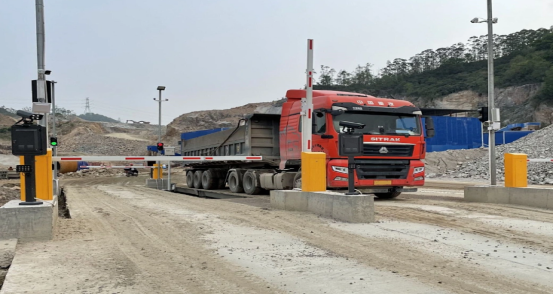
The Supervising and Controlling Unmanned Systems has various industry-specific information indicators, fully realizing artificial intelligence. Specifically, it can achieve functions such as measurement, statistical summary, information preset, permission management, prevention, and mobile push notifications. The unmanned weighing system has been widely used in port terminals, cement plants, stone plants, mining industry, coal selection/washing plants, chemical plants, steel plants, sand fields, feed plants, concrete and other industries, and has received unanimous praise from customers!